
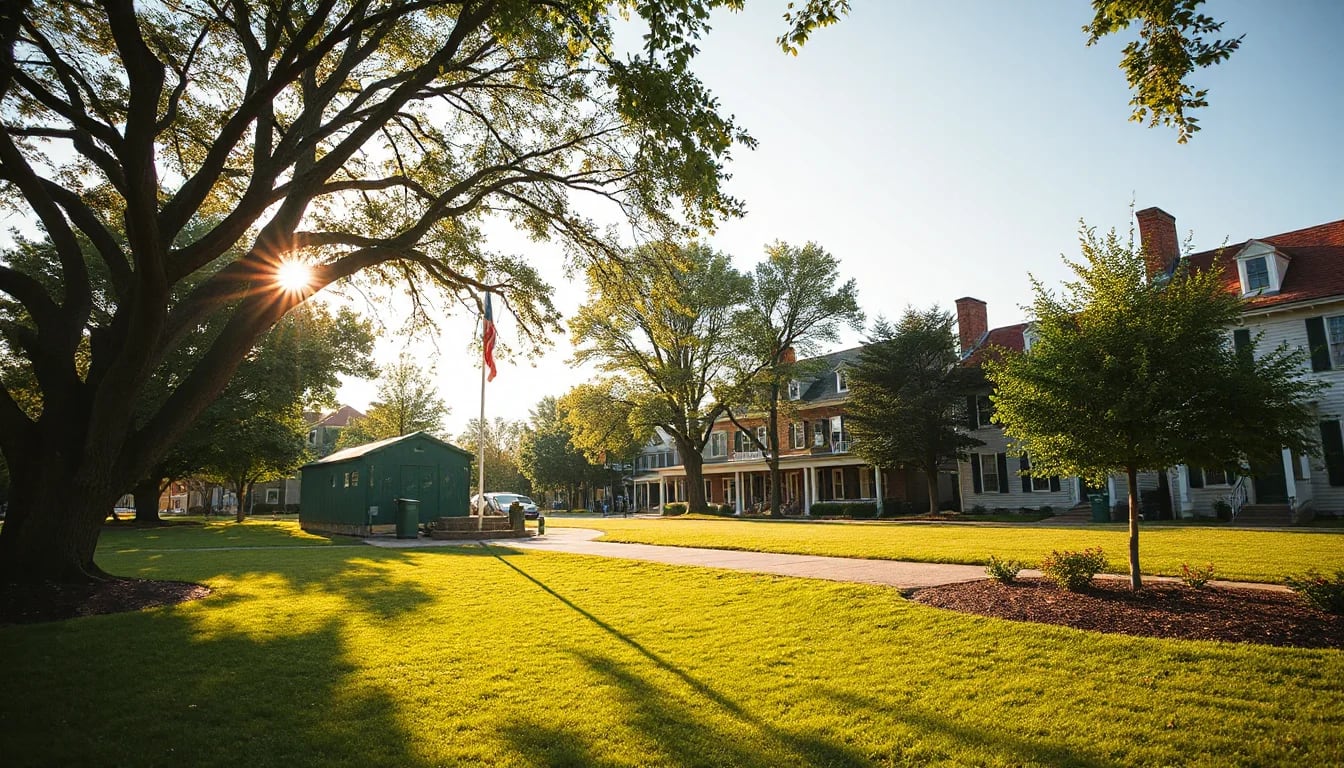
Sussex County offers a distinctly northwestern New Jersey rhythm: historic town centers, lake scenery, forested public lands, and trails that invite an unhurried weekend. Whether you are exploring the area for a move or simply planning a day out, the county’s communities make it easy to pair local culture with time outdoors. The key is to look beyond a single destination and build a route around the places that match your everyday routine.
A County Made for Exploring at Your Own Pace
Set among the ridges, valleys, farms, and waterways of northwestern New Jersey, Sussex County has a landscape that changes noticeably from one road to the next. A morning might begin with a walk around a town green, continue along a wooded trail, and finish beside a lake as the light softens over the hills. That variety is part of the appeal for people considering life here: recreation and local amenities are woven into the geography rather than set apart from it.
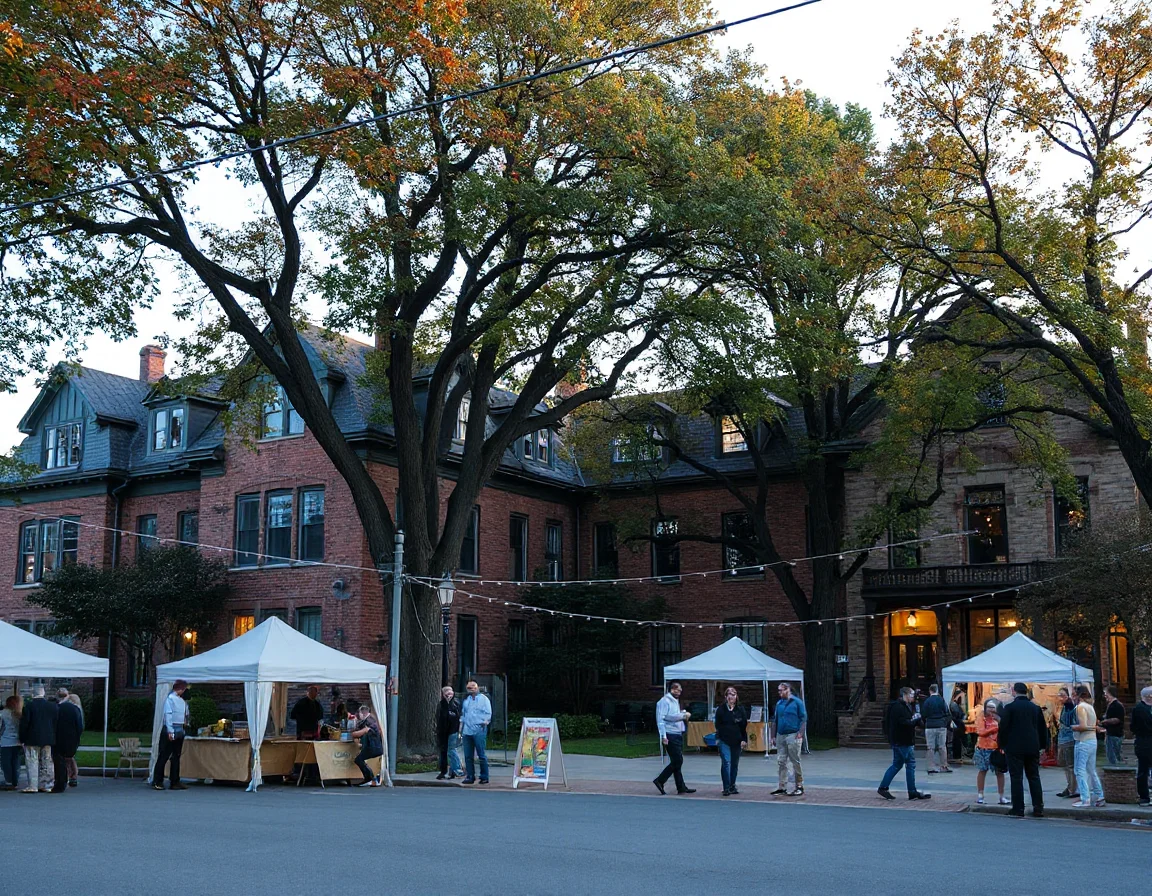
Newton, the county seat, is a natural starting point. Its historic core includes the Sussex County Courthouse, established civic landmarks, independent businesses, and places to pause for a meal or a cup of coffee. The streets near the square reward a slower look, especially when seasonal events and local arts programming bring added activity to the center of town. Newton also provides practical conveniences that make it a useful hub when exploring other parts of the county.
Elsewhere, communities such as Branchville, Andover, Franklin, Hamburg, and Sparta each offer their own combination of older architecture, services, and nearby open space. Rather than treating Sussex County as one uniform market or one uniform lifestyle, it helps to visit several towns at different times of day. Notice the road connections, parking, sidewalks, terrain, and the distance to the destinations you expect to use most often. Those ordinary details often matter as much as a scenic first impression.
In Sussex County, a few miles can change the setting from a compact village center to a lakeside road or a rural valley. Touring more than one area helps turn broad interest into a clear list of priorities.
Historic character is visible in more than landmark buildings. It appears in village-scale blocks, older homes with individual details, former rail corridors, and public spaces that have remained gathering points over generations. For buyers, that can also mean a wider range of property conditions and maintenance considerations. Original woodwork, stone foundations, wells, septic systems, sloped lots, and older heating systems deserve the same careful review as a home’s layout or curb appeal.
Lake Views, Water Access, and a Changing Seasonal Landscape
Water is one of Sussex County’s defining visual features. Lake Mohawk in Sparta is known for its distinctive lakeside setting and Tudor-influenced architecture, while Lake Hopatcong sits at the county’s eastern edge and connects the region to one of New Jersey’s most recognized freshwater destinations. Many smaller lakes, ponds, streams, and wetlands also contribute to the county’s sense of place.
The practical side of a lake-oriented setting is worth understanding early. Some waterfront areas have private access, association rules, permits, or specific launch and parking arrangements; public access points may have their own seasonal hours and regulations. If proximity to water is high on your wish list, confirm exactly what is included with a property and what is available nearby. A water view, deeded access, public access, and direct frontage are very different features.

Even without waterfront ownership, the county offers many ways to enjoy the seasonal landscape. Spring brings bright green trails and rushing creeks; summer highlights shaded paths and lake breezes; fall adds color across the ridgelines; and winter creates crisp views through bare trees. This four-season pattern can affect everything from utility costs and snow removal to how a property’s outdoor spaces function throughout the year.
For a home search, visit after rain if possible, ask about drainage and road maintenance, and pay attention to sun exposure on the lot. A beautiful slope may offer a striking view, but it can also shape driveway use, landscaping plans, and winter maintenance. These are not reasons to avoid a particular setting; they are reasons to evaluate it with a complete picture in mind.
Trails That Connect Woods, Fields, and Local History
Sussex County’s public lands create an accessible counterpoint to its town centers. Stokes State Forest, High Point State Park, Wawayanda State Park, Kittatinny Valley State Park, and the Delaware Water Gap National Recreation Area offer a broad range of terrain and trail experiences. Depending on the location, a day outdoors can include wooded paths, overlooks, rail-trail segments, lake edges, fields, or sections of the Appalachian Trail.
The Sussex Branch Trail is especially notable for people who appreciate a more gradual route through the county. Following a former rail corridor through portions of the region, it provides a different experience from a steep ridge hike: long views, changing vegetation, and a sense of how transportation shaped local communities. Conditions, surfaces, and access points vary, so checking current park guidance before heading out is always a good idea.
High Point State Park offers some of the area’s best-known elevated scenery, while Stokes State Forest brings extensive forestland and camping opportunities. Kittatinny Valley State Park includes trails, wetlands, and opportunities for activities such as walking and cycling in designated areas. The variety means outdoor time can be as ambitious or as simple as an hour-long walk close to town.
For prospective residents, trails and parks are also a useful way to understand the county’s topography. From an overlook or a trailhead parking area, it becomes easier to see where valleys open, where roads climb, and how forested land frames nearby neighborhoods. That context can be valuable when comparing commute routes, lot types, and the feeling of different locations.
Bringing Local Exploration Into a Home Search
A thoughtful Sussex County home search starts with a list of daily needs, then adds the amenities that make a place enjoyable over time. Perhaps that means being near a town center for errands and community events, having access to a trail network, finding a manageable route to work, or prioritizing a yard, garage, workshop, or outdoor living area. There is no universal “best” location; the right fit depends on how the property and its surroundings support your own plans.
When comparing homes, keep the local setting in view alongside the listing details. Ask about internet options, well and septic records where applicable, property taxes, association documents, road conditions, flood-zone information, and typical utility expenses. A clear due-diligence process gives scenic features and historic charm the practical foundation they deserve.
Sussex County’s strongest impression may be its range. A courthouse square, a lake path, a farm road, and a forest trail can all be part of the same weekend itinerary. Taking the time to explore these places in person can help you recognize not just what a home looks like, but how the surrounding community may fit into the rhythm of your days.